
What Is a Demand Flow Regulator?
A demand flow regulator is a gas regulator designed to supply gas only when an instrument creates demand. This demand is usually created by an internal pump, sampling system, or gas-drawing instrument.
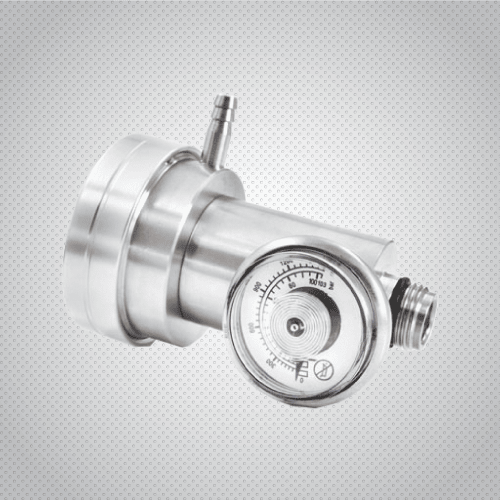
Unlike a fixed flow regulator, which delivers gas continuously at a preset flow rate, a demand flow regulator responds to the instrument. When the instrument draws gas, the regulator supplies gas. When the demand stops, the regulator automatically shuts off.
Demand flow regulators are widely used for calibration gases, pump-based gas detectors, handheld gas detectors, gas analysis instruments, and portable calibration gas systems.
Why Demand Flow Regulators Are Used in Calibration Gas
Calibration gas is used to test, verify, and calibrate gas detection instruments. Some instruments contain an internal pump that draws gas into the sensor or sampling chamber. In these cases, a demand flow regulator is often preferred because the instrument controls when gas is drawn.
This helps reduce gas waste compared with continuous-flow setups and supports calibration or bump testing where gas should only be supplied during instrument demand.
Demand flow regulators are commonly used for:
- Pump-based gas detector calibration
- Handheld gas detector calibration
- Gas detector bump testing
- Portable calibration gas cylinders
- C10 calibration gas cylinders
- CGA600 calibration gas cylinders
- High pressure calibration gas cylinders
- Gas analysis instruments
- Environmental monitoring equipment
- Industrial safety gas detection
- Marine gas detection calibration
- Laboratory test gas applications
How Does a Demand Flow Regulator Work?
A demand flow regulator connects to a gas cylinder or cylinder valve and supplies gas to an instrument when the instrument creates suction or demand.
When the instrument pump starts drawing gas, the regulator opens and supplies calibration gas. When the pump stops or demand ends, the regulator shuts off automatically.
This makes demand flow regulators suitable for pump-based instruments because gas is supplied only when required by the instrument.
For the Oxford Valves OV-DFR-400 Series, the listed models are specified with a maximum vacuum requirement for 3.0 L/min flow of 0 to 3” H2O / 5.6 mm Hg.
Demand Flow Regulator vs Fixed Flow Regulator
Demand flow regulators and fixed flow regulators are both used for calibration gas, but they work differently.
| Regulator Type | How It Works | Typical Use |
| Demand flow regulator | Supplies gas only when the instrument demands flow | Pump-based gas detectors and sampling instruments |
| Fixed flow regulator | Delivers gas continuously at a preset flow rate | Standard gas detector calibration and bump testing |
| Adjustable flow regulator | Allows the user to manually adjust the flow rate | Applications requiring variable flow control |
A demand flow regulator is normally selected when the instrument has its own pump and is designed to draw gas only as required.
Where Are Demand Flow Regulators Used?
Demand flow regulators are used wherever gas should be supplied only when demanded by the instrument.
Common applications include:
Pump-Based Gas Detector Calibration
Pump-based gas detectors draw calibration gas through an internal pump. A demand flow regulator supplies gas when the detector draws sample and shuts off when demand stops.
Gas Detector Bump Testing
Bump testing checks whether a gas detector responds to a target gas. For pumped detectors, a demand flow regulator helps supply gas only during the test.
Portable Calibration Gas Cylinders
Demand flow regulators are commonly used with portable C10 and CGA600 calibration gas cylinders.
Gas Analysis Instruments
Some gas analysers and sampling instruments draw gas through a pump or controlled sampling system. Demand flow regulators can support these applications where gas is required only during sampling.
Environmental Monitoring
Environmental monitoring instruments may use calibration gas to verify readings. Pumped systems can benefit from demand-based gas supply.
Marine and Industrial Safety
Gas detectors used in marine, refinery, petrochemical, oil and gas, and industrial safety environments may use demand flow regulators for pumped calibration applications.
Main Types of Demand Flow Regulators
Demand flow regulators are available in different configurations depending on cylinder connection, inlet pressure, outlet orientation, material, and application.
C10 Demand Flow Regulators
C10 demand flow regulators are designed for cylinders with C10 valve connections. They are commonly used with portable calibration gas cylinders and handheld pump-based gas detectors.
CGA600 Demand Flow Regulators
CGA600 demand flow regulators are designed for compatible CGA600 calibration gas cylinders and portable test gas packages.
High Pressure Demand Flow Regulators
High pressure demand flow regulators are used where the application requires a higher maximum inlet pressure and suitable cylinder connection configuration.
45-Degree Demand Flow Regulators
45-degree demand flow regulators are designed with an angled outlet configuration. This can help where the regulator layout, tubing direction, or instrument connection requires a different outlet orientation.
Key Factors When Selecting a Demand Flow Regulator
Choosing the correct demand flow regulator requires more than matching the cylinder connection. The following factors should be reviewed before selection.
1. Cylinder Connection
The regulator inlet must match the cylinder valve or cylinder package.
Common inlet options include:
- 5/8” x 18UN C10
- 1” x 20 UNF CGA600
- 1/4” NPT-F
2. Maximum Inlet Pressure
The regulator must be rated for the maximum cylinder pressure. Demand flow regulator ranges may include 83 bar, 200 bar, 207 bar, and lower pressure CGA600 configurations depending on model.
3. Instrument Demand
The regulator must respond correctly to the instrument’s pump or sampling system. The listed OV-DFR-400 models are specified with a maximum vacuum requirement for 3.0 L/min flow of 0 to 3” H2O / 5.6 mm Hg.
4. Gas Compatibility
Gas compatibility depends on gas mixture, concentration, moisture content, pressure, material, and sealing components.
5. Regulator Material
Brass nickel plated configurations are generally used for compatible non-reactive gases. Stainless steel configurations are commonly selected for reactive gases or where stainless steel construction is required. Aluminium hard anodised configurations may be suitable for compatible non-reactive gas applications where lower weight is useful.
6. Seat, Seal and Diaphragm Materials
Demand flow regulators may use Teflon, Viton, Buna-N, or combinations of these materials depending on model. These materials must be checked against the gas mixture and operating conditions.
7. Outlet Connection
The outlet connection must match the tubing or instrument connection. The listed OV-DFR-400 Series models use a 3/16” barb, 4.8 mm outlet connection.
8. Gauge Requirement
Gauge material and pressure range depend on the regulator model. Gauge selection should match the inlet pressure range and material requirements.
Brass Nickel Plated vs Stainless Steel vs Aluminium Demand Flow Regulators
Material selection is important when choosing a demand flow regulator.
| Material Configuration | Typical Use | Key Consideration |
| Brass nickel plated | Compatible non-reactive gases | Common for standard calibration gas applications |
| Stainless steel | Reactive gases or applications requiring stainless steel construction | Often selected where material compatibility is more critical |
| Aluminium hard anodised | Lightweight compatible gas applications | Useful where lower weight is preferred |
The gas mixture should always be checked before final regulator selection.
C10 vs CGA600 Demand Flow Regulators
C10 and CGA600 demand flow regulators are both used with portable calibration gas cylinders, but they are designed for different valve connections.
C10 Demand Flow Regulators
C10 demand flow regulators are used with C10 valve cylinder connections, commonly found on certain portable calibration gas cylinders.
CGA600 Demand Flow Regulators
CGA600 demand flow regulators are used with compatible CGA600 cylinder connections, often found on portable or disposable calibration gas cylinders.
The regulator inlet connection must match the cylinder valve. A regulator should not be forced onto an incompatible cylinder connection.
What Does Maximum Vacuum Requirement Mean?
Demand flow regulators respond to suction or demand created by the instrument. The maximum vacuum requirement indicates the amount of vacuum needed to achieve a specified flow.
For the Oxford Valves OV-DFR-400 Series, the listed models are specified with:
Maximum vacuum required for 3.0 L/min flow: 0 to 3” H2O / 5.6 mm Hg
This means the connected instrument must be able to generate sufficient demand for the regulator to supply the required flow.
Demand Flow Regulators for Pumped Gas Detectors
Pump-based gas detectors draw gas through an internal pump. A demand flow regulator is commonly used because it allows the detector to pull gas as needed.
This setup can be useful for:
- Confined space gas detectors
- Portable multi-gas detectors with internal pumps
- Remote sampling instruments
- Gas detection service kits
- Calibration systems where gas should not flow continuously
The correct regulator must match the detector’s required flow, suction capability, tubing setup, and calibration procedure.
Demand Flow Regulators for Gas Detector Calibration
During calibration, the detector is exposed to a known concentration of calibration gas. For pumped instruments, the gas detector draws the gas through the system.
A demand flow regulator supports this process by supplying gas only when the instrument demands it. This helps reduce unnecessary gas release and supports controlled calibration procedures.
Oxford Valves OV-DFR-400 Series
The Oxford Valves OV-DFR-400 Series includes demand flow regulators for calibration gas and pump-based instrument applications.
The range includes:
- C10 demand flow regulators
- CGA600 demand flow regulators
- High pressure demand flow regulators
- 45-degree demand flow regulators
- Brass nickel plated configurations
- Stainless steel configurations
- Aluminium hard anodised configurations
- 3/16” barb outlet models
The series is designed for technical buyers who need a demand flow regulator matched to cylinder connection, gas compatibility, inlet pressure, instrument demand, material requirement, and outlet connection.
Common Mistakes When Choosing a Demand Flow Regulator
Choosing a Demand Flow Regulator for a Non-Pumped Instrument
Demand flow regulators are intended for instruments that create demand. If the instrument does not draw gas, a fixed flow regulator may be more suitable.
Choosing Only by Cylinder Connection
Cylinder connection is important, but inlet pressure, material, gas compatibility, outlet connection, gauge range, and instrument demand must also be reviewed.
Using Brass for Incompatible Gas Mixtures
Brass nickel plated configurations are generally used for compatible non-reactive gases. Reactive gases may require stainless steel construction.
Ignoring the Instrument’s Pump Capability
The regulator must match the instrument’s ability to draw gas. The maximum vacuum requirement should be checked against the instrument or sampling system.
Selecting the Wrong Pressure Rating
The regulator must be suitable for the cylinder’s maximum inlet pressure. A regulator should never be used above its rated pressure.
How to Choose the Correct Demand Flow Regulator
A practical selection process is:
- Confirm whether the instrument is pump-based.
- Confirm the cylinder valve connection.
- Confirm maximum cylinder pressure.
- Confirm the instrument’s required flow and vacuum capability.
- Select the correct outlet connection.
- Check whether a gauge is required.
- Review gas compatibility.
- Select brass nickel plated, stainless steel, or aluminium hard anodised construction.
- Confirm seat, seal, and diaphragm compatibility.
- Match the regulator to the gas detector, sampling system, or calibration procedure.
Frequently Asked Questions
What is a demand flow regulator?
A demand flow regulator is a gas regulator that supplies gas only when an instrument creates demand, usually through an internal pump or sampling system. It shuts off automatically when demand stops.
What is a demand flow regulator used for?
Demand flow regulators are used for pump-based gas detector calibration, bump testing, gas analysis instruments, portable calibration gas cylinders, and sampling systems.
What is the difference between demand flow and fixed flow regulators?
A demand flow regulator supplies gas only when the instrument draws gas. A fixed flow regulator delivers gas continuously at a preset flow rate.
Are demand flow regulators used for gas detector calibration?
Yes. Demand flow regulators are commonly used for pumped gas detectors and instruments that draw calibration gas through an internal pump.
Can I use a demand flow regulator with a non-pumped gas detector?
Usually, a demand flow regulator is intended for instruments that create suction or demand. Non-pumped instruments often require a fixed flow regulator instead.
What is a C10 demand flow regulator?
A C10 demand flow regulator connects to a C10 cylinder valve and supplies gas as demanded by a pump-based gas detector or sampling instrument.
What is a CGA600 demand flow regulator?
A CGA600 demand flow regulator is designed for compatible CGA600 calibration gas cylinders and supplies gas only when the connected instrument demands flow.
What is the maximum vacuum requirement for demand flow regulators?
For the Oxford Valves OV-DFR-400 Series, the listed models have a maximum vacuum requirement for 3.0 L/min flow of 0 to 3” H2O / 5.6 mm Hg.
Should I choose brass nickel plated or stainless steel?
Brass nickel plated configurations are generally used for compatible non-reactive gases. Stainless steel configurations are commonly selected for reactive gases or applications requiring stainless steel construction.
What outlet connection is used on the OV-DFR-400 Series?
The listed Oxford Valves OV-DFR-400 Series models use a 3/16” barb, 4.8 mm outlet connection.
Conclusion
Demand flow regulators are important components in calibration gas and pump-based gas detection applications. They supply gas only when demanded by the instrument and automatically shut off when demand stops.
The correct demand flow regulator should be selected based on cylinder connection, maximum inlet pressure, instrument demand, gas compatibility, regulator material, outlet connection, gauge range, and application.
The Oxford Valves OV-DFR-400 Series provides demand flow regulator options for C10 cylinders, CGA600 cylinders, high pressure applications, 45-degree outlet requirements, brass nickel plated configurations, stainless steel configurations, and lightweight aluminium hard anodised configurations.

Oxford Valves
www.oxfordvalves.com
info@oxfordvalves.com