
How to Choose the Correct Purge System for Your Application
Purging is one of the most important but often overlooked parts of working with specialty gases and calibration systems. Whether you’re handling toxic gases, corrosive gases, high purity gases or sensitive calibration mixtures, purging helps ensure that you know exactly what is inside your gas delivery system at any given time.
Without proper purging, residual gases, moisture and atmospheric contaminants can remain trapped inside regulators, valves, tubing and other components. These unwanted gases can react with new gas mixtures, damage equipment, shorten regulator life and affect calibration accuracy.
Simply put, purging gives you control over your gas system and helps protect both your equipment and the people using it.
There are several key reasons why purging should always form part of your gas handling procedure:
- Removing residual gases before introducing a new gas or gas mixture that may react.
- Removing impurities when working with high purity gases or sensitive calibration mixtures.
- Removing hazardous or corrosive gases from the system after use.
Failures within gas delivery systems can create serious safety risks, particularly when working with toxic, corrosive or reactive gases. Even very small quantities of some gases can present significant hazards to personnel or equipment. Maintaining the integrity of the gas delivery system is critical, and regular purging forms an important part of that process.
While some purging can be carried out using standard regulators and manual procedures, these methods often waste valuable gas, interrupt operations or fail to fully remove contaminants from the system. Purpose-designed purge systems improve safety, reduce gas consumption and provide a far more effective solution.
Removing Resident Gases From a System Before Introduction of a New Gas or Gas Mixture Which May React
One of the primary reasons for purging is to remove gases already present in the system before introducing a new gas that may react with them.
Many gases become significantly more hazardous when they come into contact with moisture, oxygen or other contaminants commonly found in ambient air. In some cases, these reactions can create corrosive compounds that attack seals, valve seats, internal surfaces and threaded connections.
Unlike gases, these corrosive by-products cannot simply be purged away once formed and may lead to leaks, regulator damage or premature component failure.
For example, imagine a laboratory preparing to work with anhydrous ammonia. Before the regulator is connected to the cylinder, the internal spaces within the regulator and connecting components contain normal atmospheric air, including oxygen and moisture.
Because ammonia readily absorbs moisture and can react with oxygen under certain conditions, introducing the gas directly into the regulator may create unwanted reactions and contamination.
To prevent this, the technician first purges the system using dry, high purity nitrogen to remove oxygen and moisture before introducing the ammonia into the system.
This simple step protects the equipment, maintains gas purity and significantly improves safety.
Removing Dangerous or Damaging Gas From a System After Use
Purging is equally important once work has been completed.
Many gases should never be left sitting inside regulators, valves or tubing for extended periods of time. Toxic, corrosive and reactive gases can continue interacting with internal materials long after the cylinder valve has been closed.
Even regulators manufactured from high quality stainless steel and specialist materials can suffer accelerated wear when exposed to aggressive gases over long periods.
Removing these gases after use helps reduce risk to personnel, extends component life and ensures the system is ready for the next application.
Returning to our ammonia example, the cylinder valve has now been closed at the end of the experiment. However, ammonia still remains inside the regulator, cylinder connection, valves and downstream tubing.
Although the regulator has been specifically selected for ammonia service, the technician understands that leaving the gas trapped inside the system can still lead to corrosion and long-term damage.
The technician therefore uses dry nitrogen to purge the regulator and downstream system, safely displacing the remaining ammonia before disconnecting the equipment.
The purge gas is safely vented through the facility’s extraction or scrubbing system, leaving the regulator clean, safe and ready for future use.
Removing Impurities From a System Delivering a Pure Gas or Sensitive Gas Mixture
Purging is not only about safety. It is also a critical part of maintaining calibration accuracy and analytical performance.
When performing calibrations or analytical testing, the objective is simple — ensure that the only gas reaching the sensor or instrument is the gas you intend to measure.
Any residual gas, atmospheric air or moisture remaining in the system can dilute the mixture and influence results.
In these applications, the gas mixture itself often becomes the purge gas.
For example, a technician is preparing to calibrate an instrument using a 500 ppm ammonia in nitrogen calibration mixture.
The technician knows that the regulator contains atmospheric air from when it was last disconnected, while the tubing may still contain nitrogen from a previous purge procedure.
Although these gases may seem harmless, both can dilute the calibration mixture and potentially affect the calibration result.
Before beginning the calibration, the technician allows the gas mixture to flow through the regulator and tubing long enough to fully displace all unwanted gases from the system.
Only once the gas path contains the correct calibration mixture does the calibration begin.
This simple procedure helps ensure repeatable, reliable and accurate calibration results.
Types of Purge Systems
Different applications require different purging methods. The correct purge arrangement depends on the gas type, the level of purity required and the design of the gas delivery system.
Deep Purge
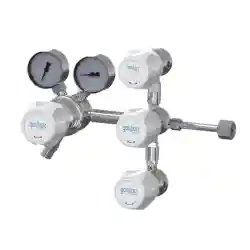
The Deep Purge system allows the entire gas delivery system to be positively purged from the cylinder connection through to the downstream equipment.
It can also be used during cylinder changeovers without allowing purge gases to pass through the regulator or downstream components.
By incorporating isolation and vent valves between the cylinder and regulator, gases can be safely directed to a suitable vent or treatment system.
Deep purge systems are commonly used where gas purity requirements are high or where highly hazardous gases are involved.
Through Purge
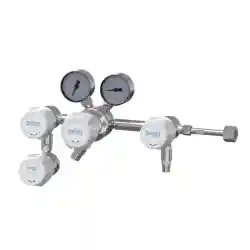
A Through Purge system is designed to purge the cylinder connection and regulator body without introducing purge gas into the downstream system.
Isolation and vent valves are installed immediately downstream of the regulator, allowing unwanted gases to be safely vented while protecting downstream equipment and processes.
This arrangement is often used where downstream equipment cannot tolerate purge gas contamination or interruption.
High Pressure Purge
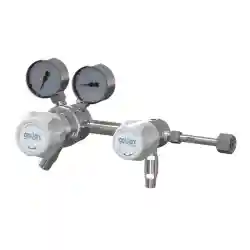
The High Pressure Purge system is designed specifically to purge the cylinder connection and regulator inlet section.
An isolation valve connects directly to the high pressure side of the regulator, allowing purge gas to pass through the regulator body before being safely vented downstream.
This provides an effective method of removing contaminants from the regulator without requiring a complete system purge.
Selecting the Right Purge System
No single purge arrangement is suitable for every application.
The correct solution depends on factors such as gas type, gas purity, process sensitivity, operating procedures and safety requirements.
Selecting the appropriate purge system can improve safety, protect equipment, extend regulator life and significantly reduce contamination risks.
If you are unsure which purge arrangement is most suitable for your application, the Oxford Valves team can help you select the right solution for your gases, regulator configuration and operating environment.
Note: Purge systems are supplied separately and do not include the regulator shown in installation examples.