
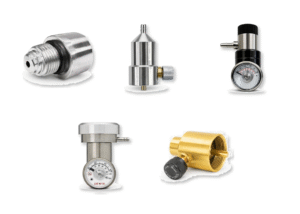
For many technicians, gas calibration is simple. Connect a regulator to the cylinder, attach some tubing, fit the calibration cap, and you’re ready to bump test or calibrate your instrument. For standard diffusion instruments, a fixed flow regulator is often all that’s needed. But not every instrument, application, or worksite operates the same way. Choosing the right regulator for the job can make calibration faster, reduce gas consumption, improve accuracy, and prevent some surprisingly common problems in the field.
Let’s look at some of the options available and where each one performs best.
Fixed Flow Regulators – The Everyday Workhorse
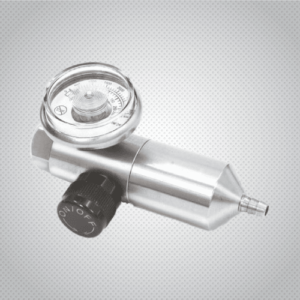
For routine bump testing and calibration, fixed flow regulators remain the most commonly used option. They provide a consistent flow rate and simple operation, making them ideal for daily testing programs. The key is making sure the regulator flow matches the instrument manufacturer’s recommended calibration flow rate. It is equally important to avoid using the same regulator across different gas mixtures.
For example, using one regulator for a standard four-gas mixture and then connecting that same regulator to a chlorine or ammonia cylinder can create contamination issues. Trace amounts of gas can remain inside the regulator and migrate into the next cylinder connected to it. While the quantities may be extremely small, they can still affect sensitive calibration mixtures and impact calibration accuracy.
A simple solution is to dedicate each regulator to a specific gas family and clearly label it for that purpose. For corrosive gases such as chlorine, ammonia, hydrogen cyanide, nitrogen dioxide and similar reactive mixtures, stainless steel regulators should always be used to maintain gas integrity and maximise regulator life.
Variable Flow Regulators – One Regulator, Multiple Applications
Not every instrument uses the same calibration flow rate. 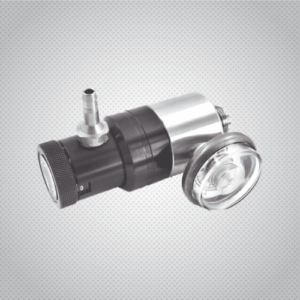
Some require 0.5 L/min, others 1.0 L/min, and some applications require significantly higher flow during setup. This is where variable flow regulators become extremely useful. With multiple selectable flow settings, technicians can quickly adjust output without changing regulators or carrying additional equipment.
They are particularly useful for fixed gas detection systems. Consider a methane detector mounted high in a plant roof space, or an H₂S detector installed deep inside a sump or bund area. Getting calibration gas to these sensors often involves several metres of tubing before the gas even reaches the sensor. Large calibration hoods and long tubing runs increase the volume of gas required before the sensor begins to respond. Using a higher flow initially allows the gas to reach the sensor quickly. Once the gas arrives, the flow can be reduced to the instrument’s recommended calibration rate. The result is a quicker calibration process, reduced waiting time, and less wasted gas.
Push Button Regulators – Ideal for Field Operators
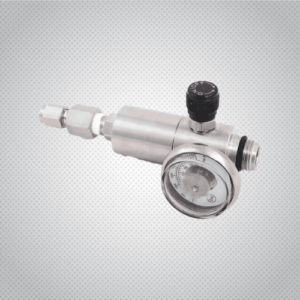
Anyone responsible for calibration gas cylinders has probably experienced the same problem at some point: Someone finishes a bump test and forgets to turn the regulator off. A few days later the cylinder is empty. Push button regulators eliminate that risk completely. Gas only flows while the button is actively pressed. As soon as the operator releases the button, the gas stops automatically.
This makes them particularly popular for:
-
Daily bump testing stations
-
Shared calibration equipment
-
Shutdown projects
-
Construction sites
-
Operator self-testing programs
They’re simple, reliable and work perfectly even when operators are wearing gloves.
Demand Flow Regulators – Essential for Pumped Instruments
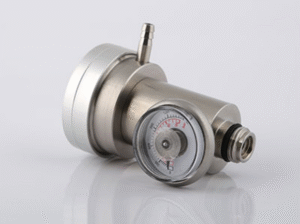
If your gas detector has an internal pump, a demand flow regulator is usually the best option. Instead of forcing gas into the instrument at a fixed pressure, the regulator simply responds to the instrument’s own pump and supplies exactly the amount of gas required.
This offers several advantages:
-
Reduced gas consumption
-
Improved calibration accuracy
-
Simpler setup
-
No flow meters or vent assemblies required
One of the most common mistakes seen in the field is using “T” pieces and open vent tubing with pumped instruments. Over time tubing gets shortened, connectors loosen, and ambient air begins entering the system through the vent point. The result is dilution of the calibration gas before it even reaches the sensor. This can lead to incorrect bump test results or poor calibration performance. Demand flow regulators eliminate this issue by allowing the instrument to control its own gas requirements.
They are ideal for:
-
Portable gas detectors with pumps
-
Docking stations
-
Automated calibration systems
-
Gas analysers
-
Sampling equipment
Using One Regulator Across Multiple Instruments
Demand flow regulators can also be used with multiple instruments at the same time, provided the total flow requirement remains within the regulator’s operating range. For example, if each instrument requires approximately 0.5 L/min, a single regulator may comfortably support several instruments simultaneously. This can significantly reduce gas consumption and simplify calibration setups during shutdowns, turnarounds, and workshop testing programs.
Don’t Forget The Materials
Choosing the correct regulator material is just as important as choosing the correct flow type. Corrosive gases require materials that can withstand chemical attack while preserving gas purity and regulator performance. For reactive and corrosive gases, stainless steel regulators combined with suitable tubing materials are strongly recommended.
Using incorrect materials can lead to:
-
Regulator damage
-
Reduced service life
-
Gas contamination
-
Incorrect calibration readings
Taking Calibration Beyond One Instrument
Modern calibration systems don’t need to be limited to testing a single instrument at a time. Gas distribution systems allow multiple detectors, docking stations, or calibration points to operate from a single gas source. Whether you’re running routine workshop calibrations or supporting a large shutdown project, distributing gas efficiently across multiple instruments can dramatically reduce calibration time and improve productivity. For organisations managing large fleets of gas detectors, these systems can quickly pay for themselves in saved gas, reduced labour time, and improved consistency.
The Right Regulator Makes A Difference
Gas regulators often get treated as simple accessories. In reality, they play a major role in calibration accuracy, gas consumption, equipment protection, and overall testing efficiency. Choosing the right regulator for your application can save time, reduce operating costs, and make calibration significantly easier for the people performing it every day.
If you’re unsure which regulator is best suited to your application, the Oxford Valves team can help you select the right solution for your instruments, gases, and operating environment.