
What Is a Dial-a-Flow Regulator?
A Dial-a-Flow regulator is a gas regulator that allows the user to manually select from a series of preset flow rates. It is commonly used with calibration gases, handheld gas detectors, bump testing equipment, portable calibration gas cylinders, and gas delivery applications where more than one flow setting may be required.
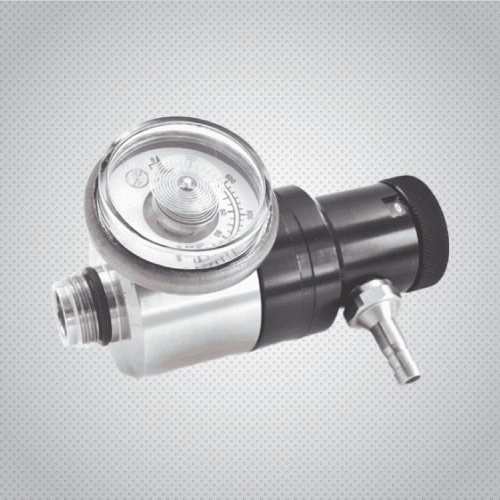
Unlike a fixed flow regulator, which delivers one preset flow rate, a Dial-a-Flow regulator gives the user several predefined flow settings in one regulator. The required flow is selected using the dial on the top of the regulator.
This makes Dial-a-Flow regulators useful for gas detection service teams, laboratories, calibration gas users, and technical buyers who work with different instruments or test procedures.
Why Dial-a-Flow Regulators Are Used in Calibration Gas
Calibration gas is used to test, verify, bump test, or calibrate gas detection instruments. During this process, the instrument must receive gas at the correct flow rate.
Different gas detectors, calibration caps, tubing lengths, and test procedures may require different flow rates. A Dial-a-Flow regulator helps by allowing the user to choose a required preset flow setting instead of using a separate fixed flow regulator for each flow requirement.
Dial-a-Flow regulators are commonly used for:
- Handheld gas detector calibration
- Gas detector bump testing
- Portable calibration gas cylinders
- C10 calibration gas cylinders
- High pressure calibration gas cylinders
- Gas detection service kits
- Laboratory test gas applications
- Environmental monitoring equipment
- Industrial safety gas detection systems
- Marine gas detection calibration
- Portable gas analysis applications
How Does a Dial-a-Flow Regulator Work?
A Dial-a-Flow regulator connects to a gas cylinder or cylinder valve and delivers gas through an outlet connection at a selected preset flow rate.
The regulator uses a single-stage design. The dial on the top of the regulator is used to manually change the flow setting. Instead of continuously adjusting the flow like a needle valve, the regulator provides defined flow positions.
This helps users select repeatable flow settings for calibration, bump testing, and gas delivery applications.
For the Oxford Valves OV-DAFR-600 Series, the range includes C10 models with a 5/8” x 18UN C10 inlet connection and high pressure models with a 1/4” NPT female inlet connection. The listed models use a 3/16” barb, 4.8 mm outlet connection.
Dial-a-Flow Regulator vs Fixed Flow Regulator
Dial-a-Flow and fixed flow regulators are both used for calibration gas, but they are selected for different reasons.
| Regulator Type | How It Works | Typical Use |
| Dial-a-Flow regulator | Allows selection from multiple preset flow rates using a dial | Calibration gas applications requiring more than one flow setting |
| Fixed flow regulator | Delivers one preset constant flow rate | Standard calibration kits and repeatable bump testing |
| Demand flow regulator | Supplies gas only when the instrument demands flow | Pump-based gas detectors and sampling instruments |
| Adjustable flow regulator | Allows manual adjustment of gas flow | Applications requiring variable flow control |
A Dial-a-Flow regulator is useful when one gas regulator needs to support several flow requirements.
Dial-a-Flow Regulator vs Vari-Flow Regulator
Dial-a-Flow and Vari-Flow regulators are similar because both provide selectable preset flow settings. The main difference is often the product design, dial layout, body style, or manufacturer-specific configuration.
For technical selection, the important questions are:
- What inlet connection is required?
- What maximum inlet pressure is needed?
- What flow settings are required?
- What outlet connection is needed?
- What material is suitable for the gas mixture?
- What gauge range is required?
- Is the application standard pressure or high pressure?
The correct selection should be based on the cylinder, gas mixture, flow requirement, pressure rating, and instrument setup.
Where Are Dial-a-Flow Regulators Used?
Dial-a-Flow regulators are used where the gas flow rate needs to be selected according to the instrument or procedure.
Handheld Gas Detector Calibration
Different handheld gas detectors may require different calibration flow rates. A Dial-a-Flow regulator allows users to select the appropriate flow setting from the available preset positions.
Gas Detector Bump Testing
Bump testing checks whether a gas detector responds to a target gas. A Dial-a-Flow regulator can support different bump test setups where the required flow rate changes between instruments or procedures.
Portable Calibration Gas Cylinders
Dial-a-Flow regulators are commonly used with portable calibration gas cylinders, including C10 cylinder valve connections.
High Pressure Calibration Gas Cylinders
High pressure Dial-a-Flow regulators are used where the inlet pressure is higher and the regulator must be matched to a suitable high pressure cylinder connection.
Gas Detection Service Kits
Service technicians may need to support several gas detector models in the field. A Dial-a-Flow regulator can reduce the need to carry multiple fixed flow regulators.
Laboratory and Test Gas Applications
Laboratories and technical users may require different flow settings for different test procedures, gas sampling arrangements, or instrument setups.
Main Types of Dial-a-Flow Regulators
Dial-a-Flow regulators are available in different configurations depending on cylinder connection, inlet pressure, material, and gas compatibility.
C10 Dial-a-Flow Regulators
C10 Dial-a-Flow regulators are designed for cylinders with C10 valve connections. They are commonly used with portable calibration gas cylinders and handheld gas detector calibration kits.
High Pressure Dial-a-Flow Regulators
High pressure Dial-a-Flow regulators are designed for higher inlet pressure applications and commonly use a 1/4” NPT female inlet connection.
Brass Nickel Plated Configurations
Brass nickel plated configurations are generally used for compatible non-reactive gas applications.
Stainless Steel Configurations
Stainless steel configurations are typically selected for reactive gas applications or where stainless steel construction is required.
Key Factors When Selecting a Dial-a-Flow Regulator
Choosing the correct Dial-a-Flow regulator requires more than selecting a flow range. The following points should be reviewed before final selection.
1. Cylinder Connection
The regulator inlet must match the cylinder valve or gas package connection.
The Oxford Valves OV-DAFR-600 Series includes:
- 5/8” x 18UN C10 inlet connection
- 1/4” NPT female inlet connection for high pressure models
2. Maximum Inlet Pressure
The regulator must be rated for the cylinder’s maximum inlet pressure.
The OV-DAFR-600 Series includes:
- C10 models rated up to 0 to 1200 psig / 83 bar
- High pressure models rated up to 0 to 3000 psig / 207 bar
3. Flow Rate Requirements
The selected flow table should match the gas detector, calibration cap, tubing setup, sampling arrangement, and test procedure.
The OV-DAFR-600 Series includes flow table options with settings up to 8.0 L/min, 3.0 L/min, or 15.0 L/min depending on selected table.
4. Outlet Connection
The outlet connection must match the tubing or calibration adaptor. The OV-DAFR-600 Series uses a 3/16” barb, 4.8 mm outlet connection.
5. Material Compatibility
Brass nickel plated configurations are generally selected for compatible non-reactive gases. Stainless steel configurations are commonly selected for reactive gases or where stainless steel construction is required.
6. Seat and Seal Compatibility
Seats and seals may include Teflon, Viton, and Buna-N. These materials should be checked against the gas mixture and operating conditions.
7. Gauge Requirement
Gauge material and pressure range depend on regulator configuration. Some models use brass gauges, while stainless steel models use stainless steel gauges.
Flow Rate Options for Dial-a-Flow Regulators
The Oxford Valves OV-DAFR-600 Series provides selectable preset flow rate tables.
Flow Rate Table 1
0 – 0.3 – 0.5 – 1.0 – 1.5 – 2.0 – 2.5 – 3.0 – 5.0 – 6.0 – 7.0 – 8.0 L/min
Flow Rate Table 2
0 – 0.15 – 0.3 – 0.5 – 0.75 – 1.0 – 1.25 – 1.5 – 1.75 – 2.0 – 2.5 – 3.0 L/min
Flow Rate Table 3
0 – 0.5 – 1.0 – 1.5 – 2.0 – 2.5 – 3.0 – 5.0 – 6.0 – 7.0 – 10.0 – 15.0 L/min
The correct flow table should be selected based on the instrument manual, approved calibration procedure, tubing arrangement, calibration cap, and application requirement.
Brass Nickel Plated vs Stainless Steel Dial-a-Flow Regulators
Material selection is important when choosing a Dial-a-Flow regulator.
| Material Configuration | Typical Use | Key Consideration |
| Brass nickel plated | Compatible non-reactive gases | Common for standard calibration gas applications |
| Stainless steel | Reactive gases or applications requiring stainless steel construction | Often selected where material compatibility is more critical |
Gas compatibility should always be checked before final regulator selection.
C10 Dial-a-Flow Regulators
C10 Dial-a-Flow regulators connect to C10 cylinder valve connections, which are commonly used on portable calibration gas cylinders.
C10 models are typically selected when the cylinder package uses a 5/8” x 18UN C10 connection and the user needs selectable preset flow rates for calibration or bump testing.
The regulator must be matched to the cylinder valve connection, maximum inlet pressure, gas mixture, flow requirement, outlet tubing, and calibration equipment.
High Pressure Dial-a-Flow Regulators
High pressure Dial-a-Flow regulators are designed for higher inlet pressure applications. They are used where the cylinder pressure exceeds the range of standard portable C10 regulator models.
The Oxford Valves OV-DAFR-600 Series includes high pressure models with a 1/4” NPT female inlet connection and maximum inlet pressure up to 0 to 3000 psig / 207 bar.
High pressure regulator selection should always consider cylinder pressure, gas compatibility, gauge range, outlet connection, and intended application.
Dial-a-Flow Regulators for Gas Detector Calibration
Gas detector calibration requires a known gas concentration and a suitable gas flow rate. If the instrument receives too much or too little gas, calibration accuracy may be affected.
A Dial-a-Flow regulator allows the user to select the required flow setting for the detector or calibration procedure. This can be useful for service teams working with multiple detector models.
Dial-a-Flow Regulators for Bump Testing
Bump testing is a functional check to confirm that a gas detector responds to a target gas. A Dial-a-Flow regulator can be useful when different detectors, test caps, or site procedures require different flow rates.
The selected flow setting should match the detector manufacturer’s recommendation or the approved site procedure.
Oxford Valves OV-DAFR-600 Series
The Oxford Valves OV-DAFR-600 Series includes Dial-a-Flow regulators for calibration gas and handheld gas detector applications.
The range includes:
- C10 Dial-a-Flow regulators
- High pressure Dial-a-Flow regulators
- Brass nickel plated configurations
- Stainless steel configurations
- Multiple selectable flow table options
- 3/16” barb, 4.8 mm outlet connection
- Gauge configurations according to model
The series is designed for technical buyers who need a selectable flow regulator matched to cylinder connection, gas compatibility, inlet pressure, outlet connection, material requirement, and calibration procedure.
Common Mistakes When Choosing a Dial-a-Flow Regulator
Choosing a Flow Table Without Checking the Instrument Manual
The selected flow setting should match the gas detector or instrument manufacturer’s recommendation.
Assuming Dial-a-Flow Means Infinite Flow Adjustment
A Dial-a-Flow regulator provides selectable preset flow rates, not unlimited adjustment across the full range.
Choosing Only by Cylinder Connection
Cylinder connection is important, but inlet pressure, material, seal compatibility, outlet connection, gauge range, and flow table should also be reviewed.
Using Brass for Incompatible Gas Mixtures
Brass nickel plated configurations are generally intended for compatible non-reactive gases. Reactive gases may require stainless steel construction.
Ignoring the Outlet Connection
The outlet must match the calibration tubing, cap, adaptor, or gas delivery setup.
Using a Regulator Above Its Rated Pressure
A regulator should never be used above its specified maximum inlet pressure.
How to Choose the Correct Dial-a-Flow Regulator
A practical selection process is:
- Confirm the cylinder valve connection.
- Confirm maximum cylinder pressure.
- Confirm the required flow settings.
- Choose the correct flow table.
- Confirm the outlet connection.
- Review gas compatibility.
- Select brass nickel plated or stainless steel construction.
- Confirm seat and seal compatibility.
- Check gauge requirement.
- Match the regulator to the gas detector, calibration cap, tubing setup, or test procedure.
Frequently Asked Questions
What is a Dial-a-Flow regulator?
A Dial-a-Flow regulator is a gas regulator that allows the user to select from multiple preset flow rates using a dial. It is commonly used for calibration gas and gas detector testing.
What is a Dial-a-Flow regulator used for?
Dial-a-Flow regulators are used for handheld gas detector calibration, bump testing, portable calibration gas cylinders, high pressure calibration cylinders, and gas detection service kits.
What is the difference between Dial-a-Flow and fixed flow regulators?
A Dial-a-Flow regulator allows the user to select from several preset flow rates. A fixed flow regulator delivers one preset constant flow rate.
Is a Dial-a-Flow regulator the same as an adjustable regulator?
Not exactly. A Dial-a-Flow regulator usually provides preset flow positions, while an adjustable regulator may allow continuous manual adjustment depending on the design.
What inlet connections are available in the OV-DAFR-600 Series?
The OV-DAFR-600 Series includes 5/8” x 18UN C10 inlet connections and 1/4” NPT female inlet connections for high pressure models.
What outlet connection does the OV-DAFR-600 Series use?
The OV-DAFR-600 Series uses a 3/16” barb, 4.8 mm outlet connection.
What is the maximum inlet pressure?
The C10 models are rated up to 0 to 1200 psig / 83 bar. The high pressure models are rated up to 0 to 3000 psig / 207 bar.
What flow rates are available?
The OV-DAFR-600 Series includes selectable flow tables with options up to 8.0 L/min, 3.0 L/min, or 15.0 L/min depending on selected table.
Should I choose brass nickel plated or stainless steel?
Brass nickel plated configurations are generally used for compatible non-reactive gases. Stainless steel configurations are typically selected for reactive gases or where stainless steel construction is required.
Are Dial-a-Flow regulators suitable for gas detector calibration?
Yes. Dial-a-Flow regulators are suitable for gas detector calibration and bump testing where selectable preset flow rates are required.
Conclusion
Dial-a-Flow regulators are useful when one calibration gas setup needs to support multiple flow requirements. They provide selectable preset flow rates using a manual dial, making them suitable for handheld gas detector calibration, bump testing, portable calibration gas cylinders, high pressure gas cylinders, and technical service kits.
The correct Dial-a-Flow regulator should be selected based on cylinder connection, maximum inlet pressure, required flow table, outlet connection, gas compatibility, regulator material, gauge range, and calibration procedure.
The Oxford Valves OV-DAFR-600 Series provides C10, high pressure, brass nickel plated, and stainless steel Dial-a-Flow regulator options for calibration gas and handheld gas detector applications.

Oxford Valves
www.oxfordvalves.com
info@oxfordvalves.com