
What Is a Fixed Flow Regulator?
A fixed flow regulator is a gas regulator designed to deliver gas at a preset constant flow rate. It is commonly used with calibration gas cylinders, handheld gas detectors, bump testing systems, gas analysis instruments, and portable gas delivery setups.
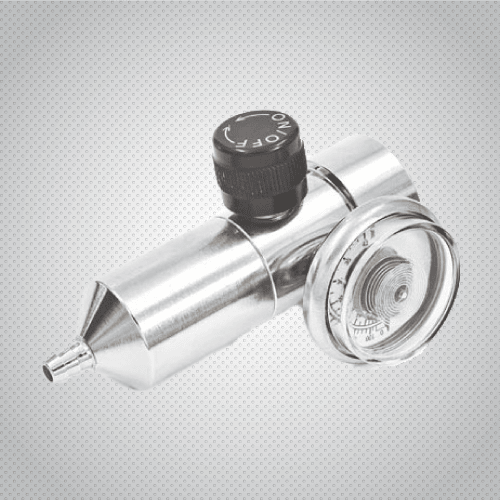
Unlike adjustable flow regulators, a fixed flow regulator is normally configured to provide one specific flow rate for the application. This helps users maintain a consistent gas delivery rate during calibration, bump testing, and instrument verification.
Fixed flow regulators are widely used in calibration gas applications because many gas detection instruments require a known and stable flow rate to ensure accurate test results.
Why Fixed Flow Regulators Are Used in Calibration Gas
Calibration gas is used to test, verify, and calibrate gas detection instruments. During calibration or bump testing, the instrument must receive gas at the correct flow rate.
If the flow is too low, the gas detector may not receive enough sample gas. If the flow is too high, gas can be wasted or the instrument may not respond as expected. A fixed flow regulator helps control this by delivering gas at a preset rate.
Fixed flow regulators are commonly used for:
- Gas detector calibration
- Gas detector bump testing
- Portable calibration gas cylinders
- Disposable calibration gas cylinders
- Refillable calibration gas cylinders
- Handheld gas detector testing
- Gas analysis instruments
- Environmental monitoring systems
- Industrial safety gas detection
- Marine safety gas detection
- Laboratory test gas applications
How Does a Fixed Flow Regulator Work?
A fixed flow regulator reduces cylinder pressure and delivers gas through a controlled outlet at a preset flow rate.
Many fixed flow regulators use a single-stage design. The inlet side connects to the gas cylinder or cylinder valve, while the outlet side connects to tubing, a calibration adaptor, an instrument, or a sampling system.
The user does not normally adjust the flow during operation. Instead, the regulator is supplied with a fixed flow rate selected for the application.
For example, a calibration gas user may require a fixed flow between 0.1 and 8.0 L/min depending on the gas detector, calibration cap, tubing length, sampling setup, or instrument requirement.
Fixed Flow Regulator vs Adjustable Flow Regulator
Fixed flow regulators and adjustable flow regulators are both used for gas control, but they are selected for different reasons.
| Regulator Type | How It Works | Typical Use |
| Fixed flow regulator | Delivers gas at a preset flow rate | Gas detector calibration, bump testing, standard calibration kits |
| Adjustable flow regulator | Allows user to adjust the flow rate | Applications requiring variable flow control |
| Demand flow regulator | Supplies gas only when the instrument draws sample | Pumped gas detectors and sampling instruments |
A fixed flow regulator is often preferred when the same gas flow rate is required repeatedly. This makes it useful for standard calibration procedures and routine bump testing.
Where Are Fixed Flow Regulators Used?
Fixed flow regulators are used wherever a controlled and repeatable gas flow is required from a cylinder.
Common applications include:
Gas Detector Calibration
Gas detectors must be calibrated using a known gas concentration and a suitable flow rate. Fixed flow regulators help deliver gas to the detector at a consistent rate.
Bump Testing
A bump test checks whether a gas detector responds to a target gas. Fixed flow regulators are commonly used because bump testing often requires quick and repeatable gas delivery.
Portable Calibration Gas Cylinders
Small calibration gas cylinders often use C10 or CGA600 connections. Fixed flow regulators are available for these cylinder formats.
Laboratory Gas Testing
Laboratories may use fixed flow regulators for controlled gas delivery to analytical instruments, test setups, or sampling equipment.
Environmental Monitoring
Environmental monitoring equipment and gas analysers may require stable calibration gas delivery for verification and quality checks.
Marine and Industrial Safety
Gas detection systems used in marine, refinery, petrochemical, and industrial safety environments often require regular calibration using fixed flow regulators.
Main Types of Fixed Flow Regulators
Fixed flow regulators are available in different configurations depending on cylinder connection, inlet pressure, outlet connection, material, and application.
CGA600 Fixed Flow Regulators
CGA600 fixed flow regulators are used with compatible CGA600 calibration gas cylinders. They are often used for portable calibration gas and handheld gas detector applications.
C10 Fixed Flow Regulators
C10 fixed flow regulators are designed for cylinders using C10 valve connections. These are common in portable calibration gas cylinders and gas detector calibration kits.
High Pressure Fixed Flow Regulators
High pressure fixed flow regulators are used where the cylinder pressure is higher and the application requires a suitable high-pressure inlet configuration.
Mini Fixed Flow Regulators
Mini fixed flow regulators provide a compact and economical design. Some mini configurations do not include a pressure gauge or on/off knob.
Compression Fitting Outlet Regulators
Some applications require a compression fitting outlet instead of a hose barb. Compression fitting outlet regulators are used where a more secure tubing connection is required.
Key Factors When Selecting a Fixed Flow Regulator
Choosing the correct fixed flow regulator requires more than matching the cylinder thread. The following points should be reviewed before selection.
1. Cylinder Connection
The regulator inlet must match the cylinder valve or cylinder package. Common fixed flow regulator inlet connections include:
- CGA600
- C10 5/8” x 18UN
- 1/4” NPT female
- Other cylinder-specific connections depending on configuration
2. Maximum Inlet Pressure
The regulator must be rated for the cylinder’s maximum inlet pressure. Fixed flow regulator ranges may include options such as 40 bar, 83 bar, 120 bar, and higher pressure configurations depending on model.
3. Required Flow Rate
The fixed flow rate should match the gas detector, calibration adaptor, instrument, tubing setup, and test procedure.
The Oxford Valves OV-FFR-300 Series supports fixed flow options from 0.1 to 8.0 L/min, depending on customer requirement.
4. Outlet Pressure
Outlet pressure must suit the application and connected equipment. Common outlet pressures include 30 psig / 2.1 bar and 60 psig / 4.1 bar depending on regulator model.
5. Outlet Connection
The outlet connection must match the tubing or instrument interface. Common options include:
- 3/16” barb
- 3/16” hose barb
- 1/8” NPT male
- 1/8” compression fitting
6. Regulator Material
The regulator material should be selected based on gas compatibility.
Brass nickel plated configurations are generally used for compatible non-reactive gases. Stainless steel configurations are commonly selected where reactive gases or more demanding gas compatibility requirements are involved.
7. Seal Material
Seats and seals must be compatible with the gas mixture and service conditions. Fixed flow regulator configurations may include materials such as Teflon, Viton, and Buna-N depending on model.
8. Gauge Requirement
Some fixed flow regulators include a pressure gauge, while mini versions may be supplied without a gauge. The correct gauge range depends on the inlet pressure and regulator configuration.
Brass Nickel Plated vs Stainless Steel Fixed Flow Regulators
Material selection is important when choosing a fixed flow regulator.
| Material Configuration | Typical Use | Key Consideration |
| Brass nickel plated | Compatible non-reactive gases | Common for standard calibration gas applications |
| Stainless steel | Reactive gases or applications requiring stainless steel construction | Often selected where material compatibility is more critical |
The gas mixture should always be checked before final regulator selection.
C10 vs CGA600 Fixed Flow Regulators
C10 and CGA600 fixed flow regulators are both used with portable calibration gas cylinders, but they are designed for different cylinder valve connections.
C10 Fixed Flow Regulators
C10 fixed flow regulators are used with C10 valve cylinder connections, commonly found on certain portable calibration gas cylinders.
CGA600 Fixed Flow Regulators
CGA600 fixed flow regulators are used with compatible CGA600 cylinder connections, often used on disposable or portable calibration gas cylinders.
The correct regulator must match the cylinder valve connection. A regulator should not be forced onto an incompatible cylinder connection.
What Flow Rate Should a Fixed Flow Regulator Have?
The correct flow rate depends on the gas detector, calibration cap, instrument requirement, tubing length, and sampling setup.
Common calibration gas applications may require low flow rates, while other systems may require higher flow depending on the instrument and procedure.
The Oxford Valves OV-FFR-300 Series is available with fixed flow rates from 0.1 to 8.0 L/min according to customer requirement.
Before selecting a flow rate, confirm the required calibration flow from the gas detector manufacturer, instrument manual, or calibration procedure.
Fixed Flow Regulators for Gas Detector Bump Testing
Gas detector bump testing is one of the most common uses for fixed flow regulators.
A bump test checks whether a gas detector responds when exposed to a target gas. The test does not always fully calibrate the detector, but it confirms that the sensor and alarm response are functioning.
For bump testing, fixed flow regulators are useful because they provide a consistent gas delivery rate without manual adjustment.
Fixed Flow Regulators for Gas Detector Calibration
Calibration requires exposing the gas detector to a known gas concentration under controlled conditions. Flow stability is important because the detector must receive gas at the correct rate.
A fixed flow regulator helps simplify this process by providing a preset flow suitable for the calibration procedure.
The regulator must be compatible with the cylinder connection, gas mixture, required flow rate, and calibration adaptor.
Oxford Valves OV-FFR-300 Series
The Oxford Valves OV-FFR-300 Series includes fixed flow regulators for calibration gas and gas detection applications.
The range includes:
- CGA600 fixed flow regulators
- C10 fixed flow regulators
- High pressure fixed flow regulators
- Mini fixed flow regulators
- Brass nickel plated configurations
- Stainless steel configurations
- Hose barb outlet models
- NPT outlet models
- Compression fitting outlet models
The series is designed for technical buyers who need a fixed flow regulator matched to cylinder connection, gas compatibility, inlet pressure, outlet pressure, flow requirement, and outlet fitting.
Common Mistakes When Choosing a Fixed Flow Regulator
Choosing Only by Cylinder Connection
Cylinder connection is important, but it is not the only selection factor. Inlet pressure, flow rate, material, outlet pressure, outlet connection, and gas compatibility must also be reviewed.
Using Brass for Incompatible Gas Mixtures
Brass nickel plated regulators are generally used for compatible non-reactive gases. Reactive gases may require stainless steel construction.
Ignoring the Required Flow Rate
A regulator with the wrong fixed flow rate can affect calibration or bump test performance. The required flow should be confirmed before ordering.
Overlooking Outlet Connection
The regulator outlet must match the tubing, adaptor, or gas delivery system. Hose barb, NPT, and compression fitting outlets are not interchangeable without the correct setup.
Selecting the Wrong Pressure Rating
The regulator must be suitable for the cylinder’s inlet pressure. A regulator should never be used above its rated pressure.
How to Choose the Correct Fixed Flow Regulator
A practical selection process is:
- Confirm the cylinder valve connection.
- Confirm maximum cylinder pressure.
- Confirm the required fixed flow rate.
- Confirm the required outlet pressure.
- Select the correct outlet connection.
- Check whether a gauge is required.
- Review gas compatibility.
- Select brass nickel plated or stainless steel construction.
- Confirm seat and seal compatibility.
- Match the regulator to the gas detector, adaptor, or calibration system.
Frequently Asked Questions
What is a fixed flow regulator?
A fixed flow regulator is a gas regulator designed to deliver gas at a preset flow rate. It is commonly used for calibration gas, gas detector bump testing, and instrument calibration.
What is a fixed flow regulator used for?
Fixed flow regulators are used to deliver calibration gas to gas detectors, bump test kits, gas analysers, laboratory equipment, and portable gas systems.
What is the difference between fixed flow and adjustable flow regulators?
A fixed flow regulator delivers one preset flow rate. An adjustable flow regulator allows the user to manually change the flow rate.
Are fixed flow regulators used for gas detector calibration?
Yes. Fixed flow regulators are commonly used for gas detector calibration and bump testing because they provide repeatable gas flow.
What is the typical flow range for a fixed flow regulator?
The Oxford Valves OV-FFR-300 Series can be supplied with fixed flow rates from 0.1 to 8.0 L/min depending on customer requirement.
What is a C10 fixed flow regulator?
A C10 fixed flow regulator is a fixed flow regulator designed to connect to a C10 cylinder valve, commonly used on portable calibration gas cylinders.
What is a CGA600 fixed flow regulator?
A CGA600 fixed flow regulator is designed for compatible CGA600 calibration gas cylinders. It is commonly used with portable or disposable calibration gas cylinders.
Should I choose brass nickel plated or stainless steel?
Brass nickel plated configurations are generally used for compatible non-reactive gases. Stainless steel configurations are commonly selected for reactive gases or where stainless steel construction is required.
What outlet connection do fixed flow regulators use?
Outlet options may include 3/16” barb, 3/16” hose barb, 1/8” NPT male, or 1/8” compression fitting depending on the regulator model.
Can a fixed flow regulator be used above its rated pressure?
No. A fixed flow regulator must not be used above its rated maximum inlet pressure.
Conclusion
Fixed flow regulators are important components in calibration gas and gas detection applications. They help deliver a preset gas flow for bump testing, calibration, instrument checking, and portable gas delivery.
The correct fixed flow regulator should be selected based on cylinder connection, inlet pressure, required flow rate, outlet pressure, outlet connection, gas compatibility, regulator material, and application.
The Oxford Valves OV-FFR-300 Series provides fixed flow regulator options for CGA600 cylinders, C10 cylinders, high pressure applications, mini regulator requirements, brass nickel plated configurations, stainless steel configurations, and different outlet connection needs.

Oxford Valves
www.oxfordvalves.com
info@oxfordvalves.com