
What Is a Lecture Bottle Valve?
A lecture bottle valve is a compact cylinder valve used on lecture bottle cylinders. Lecture bottles are small gas cylinders commonly used for laboratory gases, specialty gases, research applications, analytical testing, calibration gas and compact gas supply.
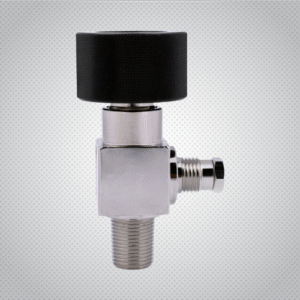
The valve provides an on/off gas control mechanism and connects the lecture bottle cylinder to a suitable regulator, adaptor or gas delivery system.
Lecture bottle valves must be selected carefully because they are pressure-containing cylinder components. The correct valve depends on the cylinder thread, outlet connection, gas compatibility, seat material, pressure rating and application.
Why Lecture Bottle Valves Are Used
Lecture bottle valves are used where small gas cylinders need controlled gas release in laboratory, research and specialty gas applications.
They are commonly used for:
- Laboratory gas cylinders
- Specialty gas packages
- Compact gas cylinder assemblies
- Analytical gas applications
- Calibration gas applications
- Research and testing facilities
- Gas sampling systems
- Educational and demonstration gas systems
- Environmental monitoring laboratories
- Industrial laboratory gas setups
Lecture bottle valves are designed for compact cylinder packages where controlled on/off gas flow is required.
How Does a Lecture Bottle Valve Work?
A lecture bottle valve connects directly to a lecture bottle cylinder through the inlet thread. The outlet side connects to a compatible regulator, adaptor or downstream gas delivery system.
The valve uses an on/off control mechanism. When opened, gas can flow from the lecture bottle cylinder through the outlet connection. When closed, gas flow is stopped.
The Oxford Valves OV-LBV-1400 Series includes lecture bottle valves with 3/8” NGT Male and 5/8” x 18UN inlet options, along with CGA 170/110 and CGA 180/110 outlet options.
Lecture Bottle Valve vs Standard Cylinder Valve
Lecture bottle valves and standard cylinder valves both control gas from cylinders, but they are designed for different cylinder formats and applications.
|
Product Type |
How It Works |
Typical Use |
|
Lecture bottle valve |
Compact on/off valve for lecture bottle cylinders |
Laboratory gas and specialty gas lecture bottles |
|
C10 valve |
Compact self-closing valve for calibration gas cylinders |
Portable calibration gas cylinders |
|
Integrated C10 valve |
Combines C10 valve and pressure reducing function |
Compact calibration gas cylinder packages |
|
Pressure reducing regulator |
Reduces cylinder pressure for downstream use |
General gas control and instrument supply |
A lecture bottle valve should be selected when the cylinder package is a lecture bottle requiring the correct inlet thread, outlet connection and pressure rating.
Where Are Lecture Bottle Valves Used?
Lecture bottle valves are used in applications where small gas cylinders are preferred for portability, limited gas volume, laboratory use or specialty gas handling.
Laboratory Gas Applications
Laboratories often use lecture bottles for small quantities of gas. The valve provides controlled access to the gas through a compatible outlet connection.
Specialty Gas Packages
Specialty gases are often supplied in compact cylinders for testing, research, instrument calibration or limited-use applications.
Analytical Instruments
Lecture bottle cylinders may be used with analytical instruments that require small quantities of gas for testing, calibration or method development.
Research and Education
Lecture bottles are used in universities, research facilities and technical institutions where small gas packages are needed for controlled experiments or demonstrations.
Calibration Gas Applications
Some calibration gas users may use lecture bottle packages where compact gas supply and suitable outlet connection are required.
Main Types of Lecture Bottle Valves
Lecture bottle valves are available with different inlet and outlet configurations. The correct model depends on the cylinder thread and downstream connection requirement.
3/8” NGT Male Lecture Bottle Valves
3/8” NGT Male lecture bottle valves are used with compatible lecture bottle cylinders requiring an NGT male inlet thread.
The Oxford Valves OV-LBV-1400 Series includes:
- 3/8” NGT Male to CGA 170/110
- 3/8” NGT Male to CGA 180/110
5/8” x 18UN Lecture Bottle Valves
5/8” x 18UN lecture bottle valves are used with compatible lecture bottle cylinders requiring a UN inlet thread.
The Oxford Valves OV-LBV-1400 Series includes:
- 5/8” x 18UN to CGA 170/110
- 5/8” x 18UN to CGA 180/110
CGA 170/110 Outlet Valves
CGA 170/110 outlet valves are used where the downstream regulator, adaptor or gas system requires this outlet connection.
CGA 180/110 Outlet Valves
CGA 180/110 outlet valves are used where the downstream equipment requires a CGA 180/110 outlet connection.
Key Factors When Selecting a Lecture Bottle Valve
Choosing the correct lecture bottle valve requires more than matching the cylinder thread. The following points should be reviewed before final selection.
1. Cylinder Thread
The valve inlet connection must match the lecture bottle cylinder thread.
The Oxford Valves OV-LBV-1400 Series includes:
- 3/8” NGT Male
- 5/8” x 18UN
2. Outlet Connection
The outlet connection must match the regulator, adaptor or downstream gas delivery equipment.
The OV-LBV-1400 Series includes:
- CGA 170/110
- CGA 180/110
3. Maximum Inlet Pressure
The valve must be rated for the cylinder pressure.
The listed OV-LBV-1400 Series models have a maximum inlet pressure of 3000 psi / 200 bar.
4. Gas Compatibility
Gas compatibility depends on the complete gas mixture, concentration, moisture content, valve material, seat material, pressure and temperature.
5. Body and Bonnet Material
The listed OV-LBV-1400 Series models use brass nickel plated body and bonnet construction.
6. Seat Material
The listed models use a PCTFE seat. Seat compatibility should be checked against the gas mixture and operating conditions.
7. Internal Components
The listed models include stainless steel internal components such as spring, diaphragm and stem components.
8. Application Type
The final valve should be selected according to whether the cylinder is used for laboratory gas, specialty gas, calibration gas, analytical gas, research, testing or demonstration use.
Inlet Connection Options
The Oxford Valves OV-LBV-1400 Series includes two inlet connection options.
3/8” NGT Male
This inlet connection is used on compatible lecture bottle cylinders requiring an NGT thread.
5/8” x 18UN
This inlet connection is used on compatible lecture bottle cylinders requiring a 5/8” x 18UN thread.
The inlet connection must be confirmed before selecting the valve. NGT and UN threads are not interchangeable.
Outlet Connection Options
The OV-LBV-1400 Series includes two outlet connection options.
CGA 170/110
CGA 170/110 outlet valves are selected where the gas application and downstream equipment require this outlet connection.
CGA 180/110
CGA 180/110 outlet valves are selected where the downstream regulator, adaptor or gas delivery setup requires this connection.
The outlet connection should be selected based on gas type, regulator compatibility and application requirement.
Materials Used in Lecture Bottle Valves
Material selection is important because the valve is in contact with the gas and must operate safely under pressure.
The Oxford Valves OV-LBV-1400 Series includes:
- Brass nickel plated body
- PCTFE seat
- Stainless steel 316 spring
- Stainless steel 316 diaphragm
- Brass nickel plated bonnet
- Stainless steel 316L lower stem
- Stainless steel 416 zinc plated upper stem
- Aluminium black anodised knob
These materials should be checked against the gas mixture, pressure and operating conditions before final selection.
Brass Nickel Plated Lecture Bottle Valves
Brass nickel plated lecture bottle valves are commonly used where the gas application is compatible with brass nickel plated construction.
They are often selected for laboratory gas, specialty gas and compact cylinder applications where this material configuration is suitable.
Brass nickel plated valves should not be assumed suitable for every gas. Gas compatibility must always be reviewed before final selection.
PCTFE Seat in Lecture Bottle Valves
PCTFE is used as the seat material in the listed OV-LBV-1400 Series models.
The seat is an important sealing component, so compatibility with the gas mixture, pressure and service conditions should be reviewed before use.
Lecture Bottle Valves for Laboratory Gas
Laboratory gas applications often require compact cylinders and controlled gas delivery.
Lecture bottle valves allow users to connect small gas cylinders to compatible regulators, adaptors or laboratory gas systems.
When selecting a lecture bottle valve for laboratory gas, check:
- Cylinder thread
- Outlet connection
- Gas mixture
- Maximum pressure
- Seat material
- Regulator compatibility
- Application procedure
Lecture Bottle Valves for Specialty Gas
Specialty gas applications may require compact cylinders for controlled supply of specific gas mixtures.
A lecture bottle valve should be selected based on gas compatibility, cylinder pressure, outlet connection and downstream regulator requirement.
The correct outlet connection is especially important because different specialty gases and regulator setups may require different CGA connections.
Oxford Valves OV-LBV-1400 Series
The Oxford Valves OV-LBV-1400 Series includes lecture bottle control valves for laboratory gas, specialty gas and compact cylinder applications.
The range includes:
- 3/8” NGT Male to CGA 170/110
- 3/8” NGT Male to CGA 180/110
- 5/8” x 18UN to CGA 170/110
- 5/8” x 18UN to CGA 180/110
- Brass nickel plated body and bonnet
- PCTFE seat
- Stainless steel internal components
- Aluminium black anodised knob
- Maximum inlet pressure of 3000 psi / 200 bar
The series is designed for technical buyers who need lecture bottle valves matched to cylinder thread, outlet connection, pressure rating, material compatibility and gas application.
Common Mistakes When Choosing a Lecture Bottle Valve
Choosing Only by Outlet Connection
The outlet connection is important, but the inlet thread, pressure rating, gas compatibility and seat material must also be checked.
Confusing NGT and UN Threads
3/8” NGT Male and 5/8” x 18UN are different inlet thread types and must not be treated as interchangeable.
Ignoring CGA Outlet Requirements
CGA 170/110 and CGA 180/110 outlet connections are different. The correct outlet should match the gas application and downstream equipment.
Using the Valve Above Its Rated Pressure
A lecture bottle valve must never be used above its maximum inlet pressure rating.
Ignoring Gas Compatibility
Valve material and seat material must be suitable for the full gas mixture and service conditions.
Treating Lecture Bottle Valves as Universal Cylinder Valves
Lecture bottle valves are designed for specific compact cylinder applications and connection standards. They are not universal cylinder valves.
How to Choose the Correct Lecture Bottle Valve
A practical selection process is:
- Confirm the cylinder is a lecture bottle cylinder.
- Confirm the cylinder inlet thread.
- Select the correct valve inlet connection.
- Confirm the required outlet connection.
- Check maximum cylinder pressure.
- Review the gas mixture and compatibility requirements.
- Confirm body and bonnet material.
- Confirm seat material.
- Check regulator or adaptor compatibility.
- Confirm the final valve selection against the intended application.
Frequently Asked Questions
What is a lecture bottle valve?
A lecture bottle valve is a compact on/off cylinder valve used on lecture bottle cylinders for laboratory gas, specialty gas, calibration gas and compact gas applications.
What is a lecture bottle valve used for?
Lecture bottle valves are used to control gas release from small lecture bottle cylinders used in laboratories, research facilities, specialty gas applications and analytical gas systems.
What inlet connections are available in the OV-LBV-1400 Series?
The Oxford Valves OV-LBV-1400 Series includes 3/8” NGT Male and 5/8” x 18UN inlet connection options.
What outlet connections are available?
The OV-LBV-1400 Series includes CGA 170/110 and CGA 180/110 outlet connection options.
What is the maximum inlet pressure?
The listed OV-LBV-1400 Series models have a maximum inlet pressure of 3000 psi / 200 bar.
What materials are used in the OV-LBV-1400 Series?
The listed models use brass nickel plated body and bonnet, PCTFE seat, stainless steel 316 spring, stainless steel 316 diaphragm, stainless steel 316L lower stem, stainless steel 416 zinc plated upper stem and aluminium black anodised knob.
Are NGT and UN inlet threads interchangeable?
No. 3/8” NGT Male and 5/8” x 18UN are different thread types and must be matched to the correct cylinder.
How do I choose between CGA 170/110 and CGA 180/110?
The correct CGA outlet depends on the gas application, regulator compatibility and downstream connection requirement.
Are lecture bottle valves suitable for all gases?
No. Suitability depends on the gas mixture, pressure, body material, seat material and operating conditions.
Can a lecture bottle valve be used above 3000 psi?
No. The listed OV-LBV-1400 Series valves should not be used above their maximum inlet pressure rating of 3000 psi / 200 bar.
Conclusion
Lecture bottle valves are compact on/off valves used on lecture bottle cylinders for laboratory gas, specialty gas, calibration gas and analytical applications. The correct valve must be selected based on cylinder thread, outlet connection, pressure rating, gas compatibility, body material and seat material.
The Oxford Valves OV-LBV-1400 Series provides 3/8” NGT Male and 5/8” x 18UN lecture bottle valve options with CGA 170/110 and CGA 180/110 outlets for compact gas cylinder applications.

Oxford Valves
www.oxfordvalves.com
info@oxfordvalves.com