
What Is an Integrated C10 Valve?
An integrated C10 valve is a compact gas control component that combines a C10 cylinder valve with a single-stage pressure reducing function in one assembly.
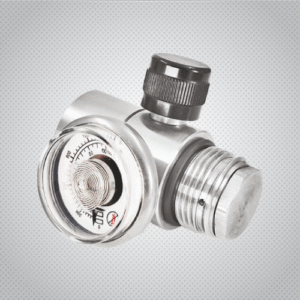
In a traditional setup, a calibration gas cylinder may use a cylinder valve and a separate regulator. An integrated C10 valve combines these functions into a more compact arrangement, helping simplify the gas delivery system for portable calibration gas cylinders.
Integrated C10 valves are commonly used for calibration gas cylinders, gas detector calibration, bump testing, specialty gas packages and portable gas delivery applications.
Why Integrated C10 Valves Are Used in Calibration Gas Cylinders
Calibration gas cylinders are often used in portable environments where size, ease of connection and controlled gas delivery are important.
An integrated C10 valve can be useful because it combines the cylinder valve and pressure reducing function into one product. This can reduce the number of separate components needed in the cylinder package and provide a compact direct-to-cylinder gas control solution.
Integrated C10 valves are commonly used in:
- Portable calibration gas cylinders
- 17L calibration gas cylinders
- 34L calibration gas cylinders
- Gas detector calibration kits
- Gas detector bump testing
- Specialty gas cylinder packages
- Environmental monitoring gas packages
- Industrial safety gas detection applications
- Marine gas detection calibration
- Laboratory test gas applications
- Portable gas analysis systems
How Does an Integrated C10 Valve Work?
An integrated C10 valve connects directly to a compatible gas cylinder and combines two functions:
- Cylinder valve function
It provides the cylinder valve connection and gas control interface. - Pressure reducing function
It includes a single-stage pressure reducing design to reduce cylinder pressure for controlled downstream use.
This integrated design can help simplify the connection between the calibration gas cylinder and the gas delivery outlet.
For the Oxford Valves OV-IC10-900 Series, the listed model uses a 1” x 14UN inlet connection and outlet options including 3/16” barb hose or 1/8” FNPT.
Integrated C10 Valve vs Standard C10 Valve
A standard C10 valve and an integrated C10 valve are related, but they are not the same.
|
Product Type |
How It Works |
Typical Use |
|
Standard C10 valve |
Provides the cylinder valve connection only |
Used with a separate regulator or adaptor |
|
Integrated C10 valve |
Combines C10 valve and pressure reducing function in one assembly |
Compact calibration gas cylinder packages |
|
Fixed flow regulator |
Connects to a cylinder valve and delivers a preset flow |
Calibration gas and bump testing applications |
|
Demand flow regulator |
Supplies gas only when the instrument demands flow |
Pump-based gas detectors and sampling instruments |
A standard C10 valve is normally paired with a separate regulator or adaptor. An integrated C10 valve combines valve and pressure reducing functions in one compact assembly.
Where Are Integrated C10 Valves Used?
Integrated C10 valves are used where a compact cylinder-mounted gas control solution is required.
Portable Calibration Gas Cylinders
Integrated C10 valves can be used on portable calibration gas cylinders where direct connection and compact design are important.
17L and 34L Gas Cylinders
Integrated C10 valves are suitable for compatible 17L and 34L cylinders used in calibration gas and portable gas packages.
Gas Detector Calibration
Gas detectors require calibration using known gas mixtures. Integrated C10 valves can support compact gas delivery from calibration gas cylinders.
Bump Testing
Bump testing checks whether a gas detector responds to a target gas. Integrated C10 valves can be used in portable test gas setups where compact gas control is required.
Specialty Gas Packages
Specialty gas suppliers may use integrated C10 valve configurations in compact cylinder packages where valve and pressure reduction are combined.
Main Features of an Integrated C10 Valve
An integrated C10 valve should be selected based on cylinder connection, gas compatibility, working pressure, outlet requirement and application.
Important features include:
- Integrated C10 valve and pressure reducing design
- Single-stage pressure reducing function
- Compact cylinder-mounted arrangement
- Stainless steel construction
- Stainless steel valve pin, valve seat and piston
- Viton and Teflon seats and seals
- 1” x 14UN inlet connection
- 3/16” barb hose or 1/8” FNPT outlet options
- Working pressure of 0 to 1200 psig / 83 bar
- Suitability for compatible 17L and 34L cylinders
Key Factors When Selecting an Integrated C10 Valve
Choosing the correct integrated C10 valve requires more than checking the inlet thread. The following points should be reviewed before final selection.
1. Cylinder Compatibility
The valve must be suitable for the cylinder type and connection. The Oxford Valves OV-IC10-900 Series is designed for compatible 17L and 34L cylinders.
2. Inlet Connection
The inlet connection must match the cylinder interface.
The OV-IC10-900 Series uses a 1” x 14UN inlet connection.
3. Working Pressure
The valve must be suitable for the cylinder pressure and application.
The OV-IC10-900 Series is listed for a working pressure of 0 to 1200 psig / 83 bar.
4. Outlet Connection
The outlet connection should match the downstream tubing, adaptor, regulator interface or gas delivery system.
The OV-IC10-900 Series includes outlet options for:
- 3/16” barb hose
- 1/8” FNPT
5. Gas Compatibility
Gas compatibility depends on the complete gas mixture, concentration, moisture content, pressure, material and seal compatibility.
6. Material of Construction
The listed OV-IC10-900 Series model uses stainless steel construction for the body, valve pin, valve seat and piston.
7. Seat and Seal Compatibility
Seats and seals may include Viton and Teflon. These materials should be checked against the gas mixture and operating conditions.
8. Application Type
The final product should be selected according to whether the cylinder is used for gas detector calibration, bump testing, specialty gas supply, environmental monitoring, laboratory gas or other portable gas applications.
Stainless Steel Integrated C10 Valves
Stainless steel integrated C10 valves are commonly selected where stronger material compatibility is required.
The Oxford Valves OV-IC10-900 Series uses stainless steel for:
- Body
- Valve pin
- Valve seat
- Piston
Stainless steel is commonly used for reactive and non-reactive gas applications, subject to gas compatibility review.
Outlet Options: Barb Hose vs FNPT
The outlet connection should be selected according to the gas delivery setup.
3/16” Barb Hose Outlet
A 3/16” barb hose outlet is used where flexible tubing is connected directly to the valve outlet.
This can be suitable for portable calibration gas setups, gas detector testing kits and tubing-based gas delivery.
1/8” FNPT Outlet
A 1/8” FNPT outlet is used where a threaded downstream connection is required.
This may be suitable for applications involving additional fittings, tubing assemblies or gas delivery components.
Integrated C10 Valves for Gas Detector Calibration
Gas detector calibration requires a known gas mixture and controlled gas delivery from the cylinder to the instrument.
An integrated C10 valve can support compact calibration gas packages by combining the cylinder valve and pressure reducing function. This can make the cylinder package simpler and more compact than using separate valve and regulator components.
The correct integrated C10 valve should be selected based on cylinder type, gas mixture, pressure, outlet connection and test procedure.
Integrated C10 Valves for Bump Testing
Bump testing is a functional check to confirm that a gas detector responds to the target gas.
Integrated C10 valves can be used in portable bump testing setups where compact gas control is required. The outlet connection should match the tubing, calibration cap or gas delivery arrangement used for the test.
Oxford Valves OV-IC10-900 Series
The Oxford Valves OV-IC10-900 Series includes an integrated C10 valve for calibration gas and portable gas cylinder applications.
The series includes:
- Integrated C10 valve and pressure reducing design
- Stainless steel construction
- 1” x 14UN inlet connection
- 3/16” barb hose or 1/8” FNPT outlet options
- Working pressure of 0 to 1200 psig / 83 bar
- Viton and Teflon seats and seals
- Suitability for compatible 17L and 34L cylinders
The series is designed for technical buyers who need a compact cylinder-mounted valve and pressure reducing solution for calibration gas, gas detector testing and portable gas packages.
Common Mistakes When Choosing an Integrated C10 Valve
Treating It Like a Standard C10 Valve
An integrated C10 valve includes a pressure reducing function. It should not be treated exactly the same as a basic cylinder valve.
Ignoring Cylinder Compatibility
The valve must match the cylinder type, size and connection interface.

Choosing Only by Thread Size
Thread size is important, but working pressure, gas compatibility, materials, seals and outlet connection must also be reviewed.
Overlooking Outlet Connection
The outlet must match the downstream tubing, adaptor or gas delivery equipment.
Ignoring Gas Compatibility
Stainless steel construction may be suitable for many gas applications, but the complete gas mixture and seal materials must still be checked.
Using the Valve Above Its Rated Pressure
An integrated C10 valve must not be used above its specified working pressure.
How to Choose the Correct Integrated C10 Valve
A practical selection process is:
- Confirm the cylinder type and capacity.
- Confirm the cylinder inlet connection.
- Confirm the working pressure requirement.
- Confirm the gas mixture and compatibility requirements.
- Check body, valve pin, valve seat and piston materials.
- Confirm seat and seal compatibility.
- Select the correct outlet option.
- Match the valve to the tubing, adaptor or gas delivery system.
- Confirm the application, such as calibration, bump testing or specialty gas supply.
- Ensure the valve is used only within its specified operating limits.
Frequently Asked Questions
What is an integrated C10 valve?
An integrated C10 valve combines a C10 cylinder valve with a single-stage pressure reducing function in one compact assembly.
What is an integrated C10 valve used for?
Integrated C10 valves are used for calibration gas cylinders, gas detector calibration, bump testing, specialty gas packages and portable gas delivery applications.
How is an integrated C10 valve different from a standard C10 valve?
A standard C10 valve provides the cylinder valve function only. An integrated C10 valve combines the C10 valve with a pressure reducing function.
Can an integrated C10 valve connect directly to a cylinder?
Yes. The Oxford Valves OV-IC10-900 Series is designed for direct connection to compatible 17L and 34L cylinders.
What inlet connection does the OV-IC10-900 Series use?
The OV-IC10-900 Series uses a 1” x 14UN inlet connection.
What outlet options are available?
The listed outlet options are 3/16” barb hose or 1/8” FNPT.
What is the working pressure?
The OV-IC10-900 Series is listed for a working pressure of 0 to 1200 psig / 83 bar.
What materials are used?
The listed model uses stainless steel body, stainless steel valve pin, stainless steel valve seat, stainless steel piston, and Viton and Teflon seats and seals.
Is an integrated C10 valve suitable for reactive gases?
Stainless steel construction is commonly selected for reactive and non-reactive gas applications, subject to full gas compatibility review.
What cylinder sizes are supported?
The integrated C10 valve is designed for direct connection to compatible 17L and 34L calibration gas cylinders.
Conclusion
Integrated C10 valves provide a compact way to combine C10 cylinder valve and pressure reducing functions in one assembly. They are useful for portable calibration gas cylinders, gas detector calibration, bump testing, specialty gas packages and compact gas delivery systems.
The correct integrated C10 valve should be selected based on cylinder compatibility, inlet connection, working pressure, gas mixture, material compatibility, seal compatibility and outlet connection.
The Oxford Valves OV-IC10-900 Series provides a stainless steel integrated C10 valve option for calibration gas and portable cylinder applications.

Oxford Valves
www.oxfordvalves.com
info@oxfordvalves.com